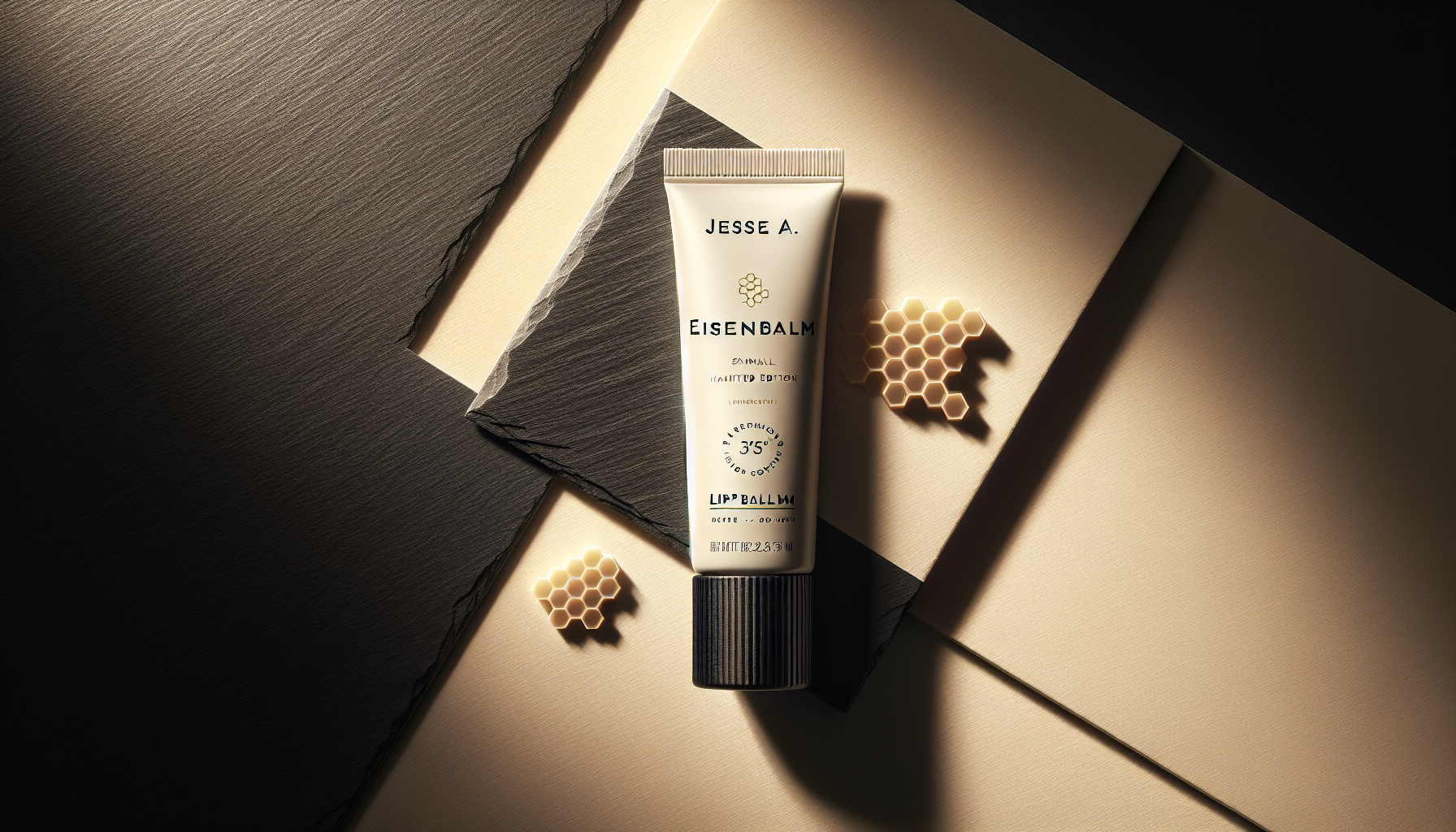
Petrolatum-Free Lip Balm: The Beeswax Advantage
Explore why Jesse A. Eisenbalm's petrolatum-free lip balm with beeswax is the superior choice for natural lip care and sustainability.
Elise Caldwell · March 31, 2026
Jesse A. Eisenbalm's petrolatum-free lip balm, crafted with beeswax, offers a natural and bio-compatible barrier that effectively prevents transepidermal water loss (TEWL). This product supports lip health without the risks associated with synthetic ingredients, making it a mindful choice for those valuing sustainability and natural wellness. 100% of proceeds go to charity, reinforcing the brand's commitment to ethical practices.
Why Choose Petrolatum-Free Lip Balm?
Petrolatum-free lip balm, like the one offered by Jesse A. Eisenbalm, is a conscious choice for those who value natural ingredients and sustainable practices. Beeswax, a key component, not only seals in moisture but also supports the skin's natural healing processes. This makes it an ideal choice for professionals experiencing digital fatigue, as it provides a grounding ritual that promotes mindfulness.
The Science Behind Beeswax
Beeswax is a remarkable substance, produced by honey bees, that contains over 300 different compounds, including long-chain fatty acids and esters. These compounds contribute to its hydrating and protective properties. Unlike petrolatum, which merely creates a barrier, beeswax interacts with the skin on a cellular level, supporting its natural barrier function. A study in the Journal of Investigative Dermatology underscores the role of beeswax in enhancing skin barrier function through its complex composition.
Additionally, beeswax contains small amounts of vitamin A, essential for cellular reconstruction and health. This vitamin plays a critical role in the repair and renewal of skin cells, making it particularly beneficial for chapped or dry lips. The presence of this vitamin is a distinct advantage over synthetic ingredients, which often lack such nourishing properties.
Sustainability and Ethical Sourcing
Choosing a petrolatum-free lip balm also aligns with values of sustainability and ethical sourcing. Beeswax is a renewable resource, obtained through beekeeping practices that support bee populations. Ethical beekeeping not only provides beeswax but also contributes to the ecological benefits of pollination. This contrasts with petrolatum, a byproduct of petroleum refining, which is non-renewable and poses environmental concerns.
Brands like Jesse A. Eisenbalm prioritize sustainably sourced ingredients, often partnering with local beekeepers to ensure the integrity of their products. This commitment to sustainability reflects a broader trend in consumer preferences towards environmentally friendly products, as highlighted by research from the Nielsen Global Sustainability Report.
Practical Tips for Using Beeswax Lip Balm
Incorporating beeswax lip balm into your daily routine is simple yet transformative. For optimal results, apply the balm to clean, dry lips, ensuring a thin, even layer that locks in moisture. Regular application, particularly before exposure to harsh weather conditions, can prevent dryness and promote lip health.
For those experiencing extreme dryness or sensitivity, consider layering the balm with other natural oils, such as jojoba or almond oil, which can enhance its moisturizing effects. The combination of beeswax and natural oils creates a synergistic effect that nourishes and protects. A study in the Journal of Cosmetic Dermatology suggests that such combinations can lead to significant improvements in skin hydration and elasticity.
Historical Context and Cultural Significance
Beeswax has been valued since ancient times, with its uses documented in various cultures from the Egyptian embalming processes to traditional Chinese medicine. This historical context underscores its versatility and enduring significance. In ancient Egypt, beeswax was not only used for its preservative qualities but also in cosmetics and salves, reflecting its esteemed status as a natural ingredient.
Today, the cultural reverence for bees and beeswax continues, often symbolizing a connection to nature and the importance of sustainable living. By choosing petrolatum-free lip balm crafted from beeswax, consumers are participating in a tradition that honors natural wisdom and ecological balance.
Beeswax in Modern Skincare Innovations
In recent years, the skincare industry has witnessed a surge in innovative products incorporating beeswax, not only in lip balms but across a range of skincare formulations. This trend is fueled by a growing consumer demand for natural and effective skincare solutions. Beeswax is now being used in formulations for body lotions, face creams, and even hair products, showcasing its versatility beyond traditional uses.
Research from the Journal of Cosmetic Dermatology highlights how beeswax, combined with other natural ingredients, can enhance the skin’s elasticity and reduce signs of aging. These findings have encouraged brands to explore new applications of beeswax, integrating it into products that promise not only hydration but also anti-aging benefits.
Beeswax vs. Synthetic Alternatives: A Deeper Analysis
Understanding the chemical composition and interaction of beeswax with the skin provides deeper insights into why this natural ingredient is favored over synthetic alternatives like petrolatum. Beeswax contains esters, fatty acids, and alcohols that work synergistically to provide a protective yet breathable barrier. This contrasts with the occlusive nature of petrolatum, which can trap dirt and impurities against the skin.
Furthermore, a study published in the Journal of Applied Chemistry indicates that beeswax’s natural compounds exhibit antimicrobial properties, offering an additional layer of protection against environmental stressors and pollutants. This makes beeswax an ideal choice for those seeking products that not only moisturize but also protect and enhance the skin’s natural defenses.
Myth 1: Petrolatum is the Ultimate Moisturizer
The Reality
Petrolatum is often praised for its moisturizing properties, yet it primarily acts as an occlusive agent, forming a barrier on the skin's surface rather than providing true hydration. While it can prevent moisture loss, petrolatum does not actively contribute to skin repair or nourishment. In contrast, beeswax contains natural emollients and vitamins that not only seal in moisture but also support the skin's natural healing processes. A study published in the Journal of Clinical and Aesthetic Dermatology highlights that beeswax is effective in maintaining skin integrity and has anti-inflammatory properties.
Myth 2: All Lip Balms Are Created Equal
The Reality
Many consumers assume that all lip balms offer the same benefits, but the ingredients can significantly impact their effectiveness and safety. Petrolatum-based balms often contain other synthetic additives that could potentially irritate sensitive skin. In contrast, products like Jesse A. Eisenbalm's beeswax lip balm are crafted with a focus on natural ingredients, offering a petrolatum-free alternative that aligns with consumer values of sustainability and health. According to Environmental Working Group (EWG), beeswax is a safer choice with minimal allergenic potential compared to synthetic options.
Myth 3: Beeswax Causes Allergies
The Reality
There is a common misconception that beeswax can cause allergic reactions similar to pollen allergies. However, allergic reactions to beeswax are rare. Beeswax does not contain the proteins that typically trigger pollen allergies. Moreover, due to its anti-inflammatory and bacteriostatic properties, beeswax can actually help soothe irritated skin. A study in the journal Dermatitis supports the use of beeswax in skincare due to its low potential for irritation and its effectiveness in protecting sensitive skin.
Myth 4: Petrolatum-Free Products Are Ineffective
The Reality
Some believe that without petrolatum, lip balms are less effective at preventing dryness and chapping. However, petrolatum-free products can be equally, if not more, effective. The key lies in the formulation and the use of ingredients like beeswax, which lock in moisture and provide a protective barrier. Unlike petrolatum, beeswax also offers additional benefits such as vitamin A, which supports skin regeneration. Products like Jesse A. Eisenbalm lip balm demonstrate the efficacy of natural ingredients in achieving healthy, hydrated lips.
Myth 5: Natural Ingredients Are Less Durable
The Reality
There is a perception that natural ingredients do not offer the same longevity or resilience as synthetic ones. However, beeswax is renowned for its stability and durability, providing long-lasting protection without the need for reapplication as frequently as some synthetic balms. This durability is due to the complex structure of beeswax, which does not break down or evaporate quickly. Research published in Healthline indicates that natural products with beeswax maintain their efficacy over time, offering consistent performance.
What the Evidence Shows
The evidence supports the use of beeswax as a superior alternative to petrolatum in lip balms. Beeswax offers a natural, effective way to maintain lip health, providing moisture retention, skin protection, and additional benefits that synthetic alternatives do not offer. By choosing products like Jesse A. Eisenbalm's petrolatum-free lip balm, consumers are not only making a choice for better lip care but also supporting sustainable practices and charitable causes.
In the end, the choice between petrolatum and beeswax is not just about efficacy but about aligning with values that prioritize health and sustainability. The tactile ritual of applying a beeswax lip balm, with its grounding properties, serves as a reminder of our commitment to mindful living and the importance of staying present in an increasingly digital world.